History feature
Historical route
Mediterranean corsairs brought ports, ransom, diplomacy, captivity, state power, and a serious shortage of movie posters.
The Barbary corsair story is usually pictured as a raid: armed ships, dangerous coasts, frightened merchants, prisoners taken at sea.
The raid was only the opening move. The system ran through captives, ransom money, treaties, safe-conduct papers, consuls, naval threats, religious pressure, state ambition, and governments deciding how much protection their trade was worth. Its violence lasted because it became administrative.
Hollywood usually misses the machinery. The Barbary corsairs were not a single pirate gang with a convenient flag. They belonged to a Mediterranean world where raiding, state power, diplomacy, captivity, and commerce were tangled together.
Ports made the system possible
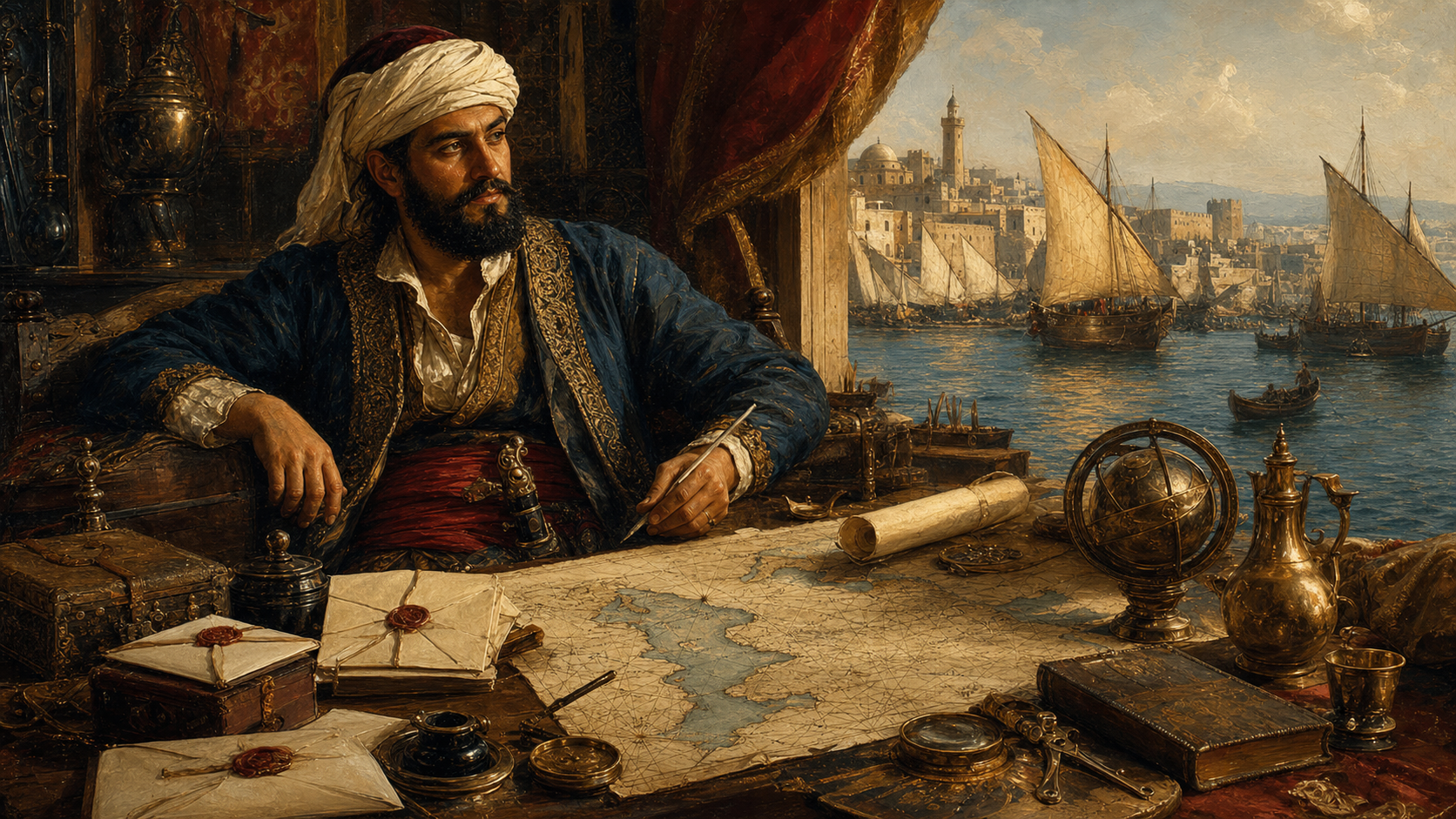
When people say "Barbary corsairs," they usually mean the North African coast and ports such as Algiers, Tunis, Tripoli, and Salé. These places were not identical. Algiers, Tunis, and Tripoli stood in different relationships with Ottoman power and local rulers; Salé belonged to a Moroccan Atlantic world with its own politics.
Together, they occupied a sea full of merchants, fishing boats, pilgrims, diplomats, naval patrols, smugglers, captives, and crews who knew that law at sea depended on enforcement. A ship's papers mattered. So did its flag. So did the guns behind the flag.
Corsairing brought goods, money, captives, and political leverage. It could be condemned as piracy by enemies and treated as licensed force by those who benefited from it. The label did not change the experience of the captured sailor.
Ransom made violence repeatable
A captured ship produced an immediate loss. Captured people created an ongoing negotiation. Families, religious redemption orders, consuls, merchants, rulers, and naval commanders might all enter the process. A sailor taken at sea could become labor, ransom claim, diplomatic problem, propaganda, and financial burden at the same time.
Catholic orders such as the Trinitarians and Mercedarians raised funds for captives. Protestant states developed their own channels. Consuls wrote letters, counted prisoners, argued over prices, and tried to keep governments from appearing weak. The human danger was personal; the machinery around it was institutional.
The paperwork can look cold: names, prices, lists, delays, promises, disputes over rank and value. That coldness is part of the history. Ransom turned suffering into an account book without making it less human.
Treaties bought time, not peace
European states did not respond with one mind. Some paid. Some negotiated. Some sent warships. Some did all three. A treaty might protect one flag while leaving another exposed. A payment might buy safer passage for a season or a route without changing the larger balance of power.
The United States learned this after independence. American merchant ships no longer moved under British protection, and the new republic had to negotiate, pay, threaten, and eventually fight. The Barbary Wars are often told as a clean birth-of-the-navy story. They also show older Mediterranean arithmetic: protection required money, treaties, ships, credibility, and the will to use force.
A flag did not protect itself by being morally confident.
The labels still bite
Calling every Barbary raider a pirate hides the political structure that made the system last. Calling every raider a privateer makes captivity sound too tidy. Corsair is the more useful word, but it is not a compliment. It points to licensed or semi-licensed maritime raiding, not innocence.
Christian Europe also used licensed maritime violence. Privateering, colonial coercion, naval retaliation, and commercial war were not North African inventions. That fact does not excuse captivity or ransom. It prevents the story from becoming a crude morality play with clean sides.
The Mediterranean was a world of trade, war, religion, money, fear, negotiation, and selective outrage. People on all sides used moral language while making practical deals.
Power ended what morality could not
The Barbary corsair system did not fade because the sea became kinder. It weakened under changing naval power, treaty pressure, bombardments, and imperial expansion. The nineteenth century brought heavier European intervention, including major naval attacks and French conquest in Algeria.
That ending was about power. Empires that condemned captivity were also capable of building coercive systems of their own. The story does not resolve into simple moral improvement. It shows how maritime violence can last when ports, rulers, merchants, captives, diplomats, and navies all have roles inside the same machine.
The corsairs mattered because they forced states to prove what their protection was worth. The captives mattered because the machine rested on human vulnerability. The paperwork mattered because the violence was organized enough to be negotiated with.
For the legal side of this problem, continue to the history of piracy, treaties, and maritime law. For an earlier Mediterranean ransom story with a famous hostage at its center, read Julius Caesar and Roman-era piracy.
<!-- Codex notes: - Import as draft only. Do not publish automatically. - Preserve attribution decision exactly as specified in frontmatter. - Review internal links against current Umbraco paths before publishing. - Source queue bucket: Blank-author, requires attribution decision - Audit note: Review for small clarity, evidence, and ending improvements without stretching the topic. -->


