Article
The legend, tested
Less costume rack, more stolen workwear.
The movie pirate gets a wonderful wardrobe.
Tall boots. Flowing shirt. Perfect sash. Giant hat. A coat that has apparently survived saltwater, blood, tar, rain, and cannon smoke without developing a single practical complaint.
Real sailors were not dressed by the costume department.
They were dressed by work, weather, theft, poverty, prize goods, heat, repair, vanity, and whatever still held together after weeks at sea. Pirate clothing could be dramatic, especially when successful pirates wore stolen finery. But most of the time clothing was not an identity brand.
It was equipment.
And equipment sweats.
Start with work
A pirate ship was a workplace before it was an icon.
Men hauled lines, climbed rigging, patched sails, loaded guns, pumped water, rowed, boarded, steered, repaired, cooked, watched, fought, slept badly, and sweated into everything. Clothing had to survive movement, sun, salt, damp, and filth.
Loose shirts, slops or breeches, jackets, caps, neckcloths, stockings, shoes when useful, bare feet when practical, and improvised coverings all make more sense than the polished outfit people now imagine.
This does not mean every pirate looked dull. Sailors have never been immune to display. But usefulness came first because the sea punished nonsense quickly.
A sash might look stylish.
It also held things.
Clothing was cargo
Pirates did not shop from a pirate uniform catalogue.
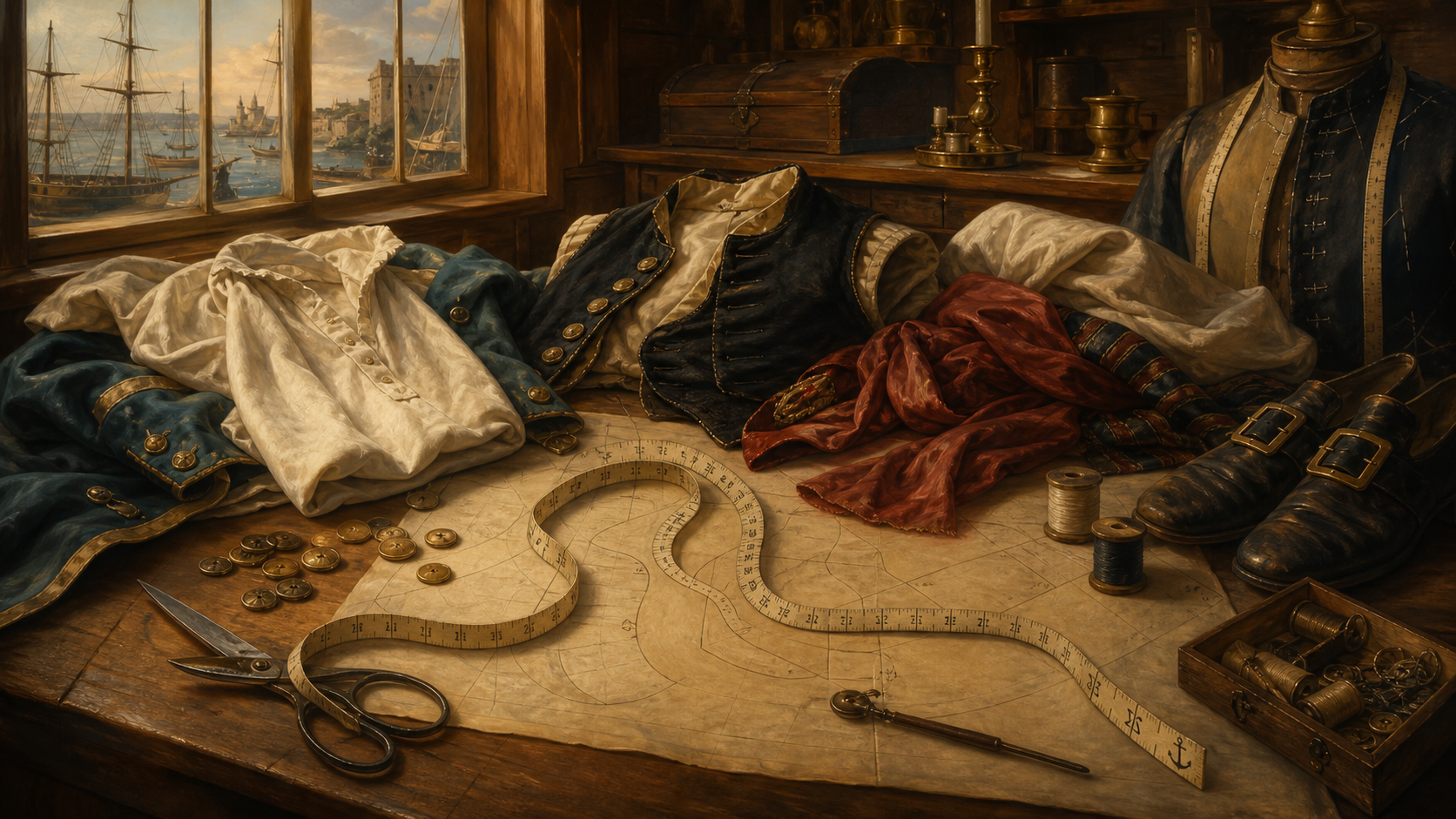
They stole from ships that carried cloth, garments, luxury goods, work clothes, military castoffs, sailor gear, hats, shoes, ribbons, coats, and whatever else trade happened to place in their path. Clothing could be worn, traded, divided, gifted, or sold.
That is one reason pirate appearance could vary wildly. A crew might include men from different nations, ports, races, trades, and previous services. Their clothing reflected merchant ships, naval vessels, colonial towns, African and Caribbean worlds, European fashion, and the accident of the last prize taken.
The result was not a clean costume.
It was a moving secondhand market with cannons.
Fine clothes were possible
Some pirates did dress splendidly when they could.
Bartholomew Roberts is the famous example: remembered in rich clothing, with a red waistcoat and jewelry in the image attached to his final fight. That kind of display mattered. Clothing could announce success, confidence, command, and contempt for ordinary rank.
But the exceptional image must not become the everyday rule.
Roberts is memorable partly because the description is so sharp. Fine clothing at sea was possible, especially after plunder. It was also fragile, hot, dirty, and impractical under hard use. A captain might dress to impress, intimidate, or perform status. The ordinary labor of the ship still needed bodies that could move.
A velvet pirate is dramatic.
A sweating sailor in a patched shirt is more useful.
The Caribbean was not kind to glamour
Heat changes fashion.
So do insects, sunburn, damp, mold, infected cuts, and the smell of men trapped together on a wooden vessel. Heavy coats and high boots look good in illustrations. They make less sense when the air is wet, the deck is hot, and the work does not stop because someone wants a better silhouette.
Headcloths, caps, light shirts, rolled sleeves, and garments that could be repaired or replaced were practical. Shoes were useful but not always ideal on deck. Bare feet could grip wet surfaces, though they also exposed men to injury.
The pirate wardrobe was shaped by conditions.
The conditions were not glamorous.
Weapons changed the look
Pirate clothing also had to make room for violence.
Belts, sashes, bandoliers, and pockets could hold knives, pistols, powder, shot, tools, or small valuables. A boarding action was not a ballroom. Clothing that trapped movement or made climbing difficult could become dangerous.
The modern pirate costume loves layers because layers photograph well.
A working sailor wanted access, motion, and survivability. If he wore something flamboyant, he still had to fight, climb, duck, row, and run in it.
The best pirate outfit was not the prettiest one.
It was the one that did not get him killed.
Pirates wore stolen status
Clothing was social language.
A fine coat, bright cloth, or expensive accessory could let a pirate wear power he had not been born into. That was part of the appeal. Men who had been treated as disposable labor could suddenly dress above their station after a successful prize.
Here, pirate fashion becomes interesting rather than merely practical. Stolen clothing could become revenge, performance, comedy, intimidation, or aspiration. A common sailor in a gentleman's coat was more than warmer. He was turning social rank into visible plunder.
It does not make the theft noble.
It does explain why plundered fashion could feel like part of the rebellion.
The familiar picture is useful, but misleading
Modern pirate costumes compress many signals into one readable shape: hat, sash, boots, stripes, sword, skull, maybe an earring, maybe a coat. That shorthand works because people recognize it instantly.
But shorthand is not evidence.
Striped shirts were not a universal pirate uniform. Giant hats were not mandatory. Everyone did not wear tall boots. Earrings have a complicated sailor folklore afterlife, but they were not a pirate ID badge. The more a costume looks like every pirate at once, the less it probably looks like one working sailor on one particular ship.
Use the costume for play.
Use the history for understanding.
What pirates probably looked like
A real pirate crew probably looked mixed, worn, patched, and inconsistent.
Some men were poor. Some were recently successful. Some had stolen finery. Some wore sailor clothes. Some wore garments from captured cargo. Some dressed for heat, some for weather, some for vanity, some for necessity. A captain could look splendid; the man beside him could look like the sea had been chewing on him for a month.
That unevenness is the point.
Pirates were not a uniformed order. They were sailors, criminals, privateers gone rogue, escaped men, coerced men, skilled workers, opportunists, and survivors moving through a brutal Atlantic economy.
Their clothes came from that world.
What survives
Pirate fashion was not one look.
It was practical clothing under stress, interrupted by plunder, vanity, status play, and the occasional magnificent stolen coat.
The movies were not wrong because they made pirates stylish. Some pirates understood style very well. The movies were wrong because they made style look effortless, clean, and universal.
The historical wardrobe had sweat in it.
It had patches, salt, stolen cloth, social ambition, practical compromise, and the sharp knowledge that looking dangerous mattered less than staying alive.
That is less glamorous than the costume aisle.
It is also much better history.


