The story
Cruelty Became the Career
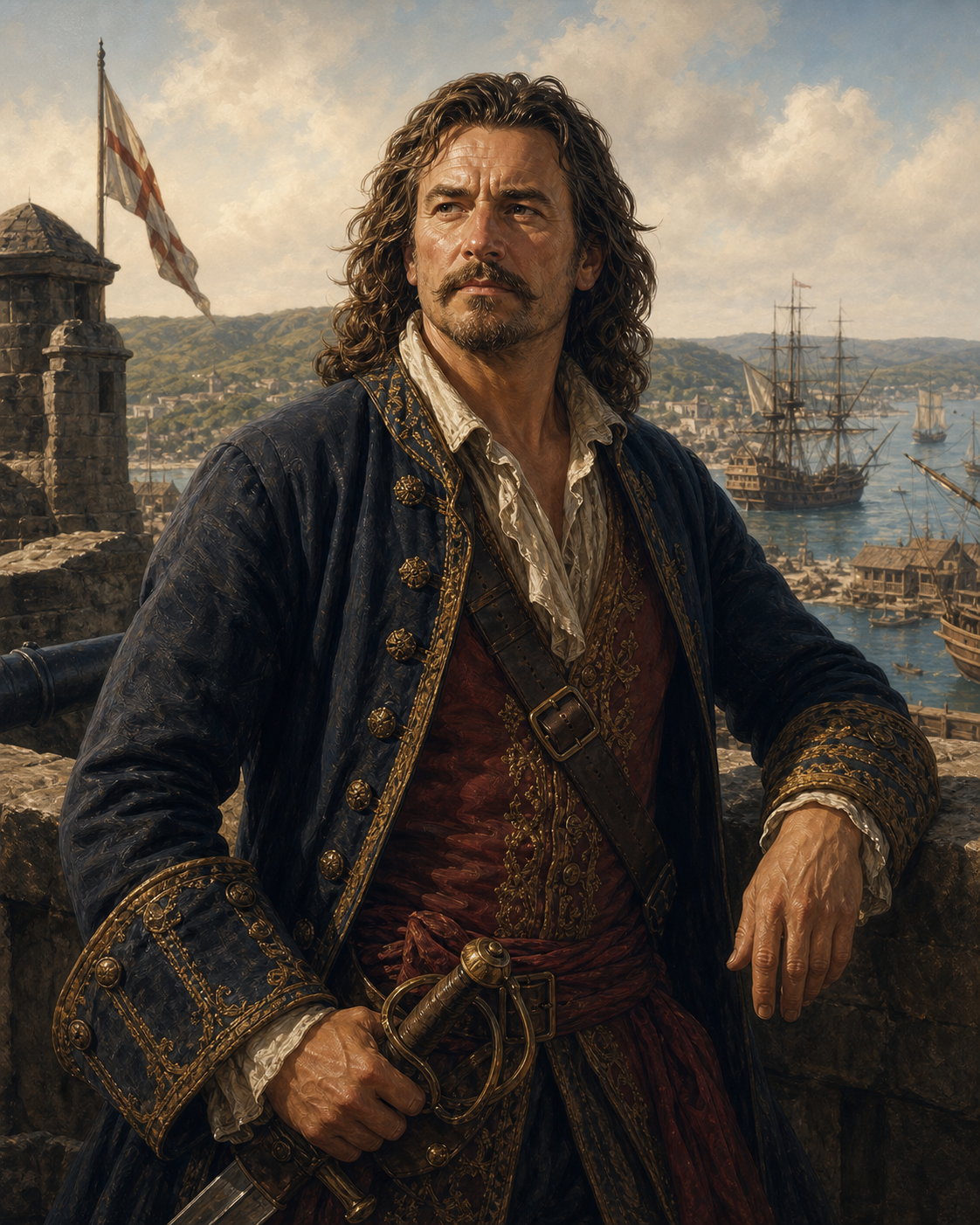
Roche Brasiliano belongs to the Caribbean before piracy became a costume shape.
He was a seventeenth-century buccaneer remembered for brutality even in a world already built around raids, ransom, hunger, drink, illegal trade, and colonial war. That reputation should be handled carefully. Early buccaneer accounts liked shocking detail, and later retellings kept the worst scenes because horror travels well. But source caution should not turn the Caribbean gentle. Brasiliano’s world rewarded men who could frighten people into obedience.
A Hard Caribbean World
Buccaneering grew from hunting camps, illegal trade, privateering, smuggling, raiding, and imperial rivalry. Men moved between land and sea as opportunity allowed. They hunted cattle and pigs, smoked meat, traded with whoever would buy, and attacked Spanish targets when the risks looked worth it.
European empires helped create that world. They armed useful raiders, condemned inconvenient ones, and treated violence differently depending on whose flag benefited. A buccaneer could be tolerated from one shore and cursed from another. Brasiliano lived inside that hypocrisy, where reputation could become both weapon and liability.
The Caribbean was not a clean contest between order and outlawry. It was a region where law, profit, revenge, disease, enslaved labor, and coastal weakness pressed together. Men like Brasiliano did not invent that violence. They learned how to use it.
Fear Paid
Fear could make captives speak, towns pay, crews hesitate, and enemies remember a name before the ship arrived. Cruelty became a form of advertisement. A victim who believed the next hour would get worse might surrender money, routes, hidden goods, or names more quickly.
That practical use makes the reputation colder. In buccaneer accounts, torture and threats often appear near questions of ransom, valuables, guides, and retaliation. Violence was not always a breakdown of discipline. It could be part of the method.
It also created enemies. A raider known for brutality might frighten one target into surrender and make the next target fight harder. He might earn obedience from his own men and hatred from everyone else. Reputation made Brasiliano larger in memory. It did not make him safe.
A Source That Cuts Both Ways
Much of the buccaneer world reaches modern readers through Alexandre Exquemelin’s Buccaneers of America. The book is essential and difficult. It preserves names, scenes, habits, and violence that might otherwise be lost. It also passed through memory, translation, moral drama, commercial appetite, and readers who wanted the Caribbean to shock them.
Brasiliano has to be read with that double vision. Every lurid detail does not deserve blind trust. The larger pattern, however, cannot be dismissed as decoration. He was remembered as a man whose cruelty stood out in a brutal trade.
The useful question is not whether he was the worst man in the Caribbean. The useful question is what kind of system made such a reputation valuable.
No Romance Left To Rescue
Brasiliano is a hard case because he strips away the cheerful version of buccaneering. No grand political project redeems the violence. No elegant legal argument makes him tidy. No famous last stand turns him into a tragic figure. What remains is a raider whose remembered power depended on fear.
That makes him historically useful. He shows how piracy and buccaneering could function through intimidation as much as seamanship. Ships, weapons, local knowledge, buyers, and crews mattered. So did the name that arrived before the ship.
For a broader look at buccaneer violence and imperial usefulness, continue to Henry Morgan. For the wider setting of Caribbean havens and colonial pressure, follow Pirate Ports. Brasiliano leaves little room for costume romance. He belongs to the part of pirate history that should stay uncomfortable.


