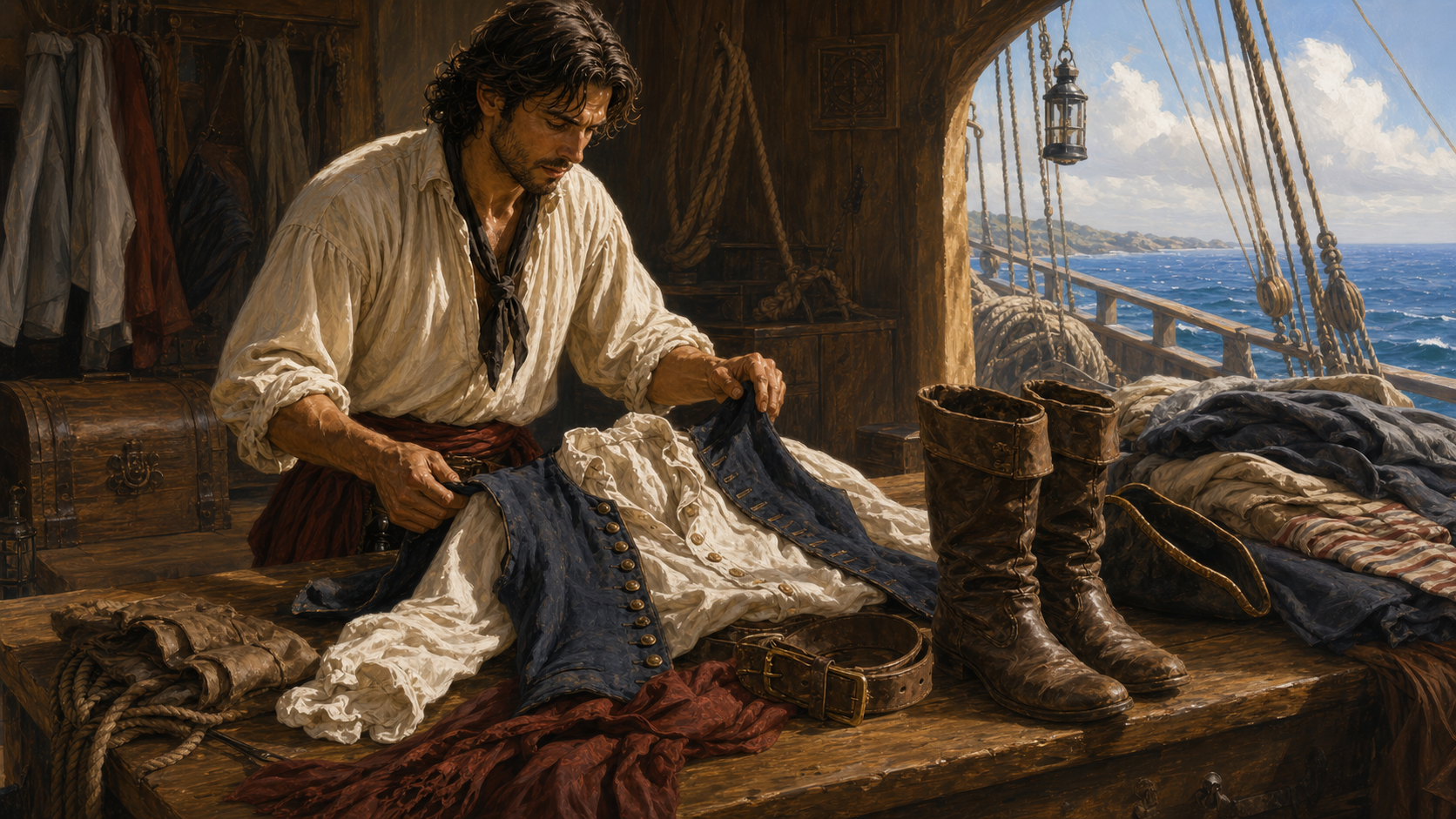
A classic pirate costume announces itself before the wearer says a word.
Hat. Sash. Boots. Loose shirt. Sword. Skull detail. The signal is instant. Nobody mistakes it for a tired poet, a failed musketeer, or a Renaissance fair emergency. That speed is the classic costume's strength.
It is also the danger. The fastest pirate costume can become the cheapest-looking one if every piece is shiny, stiff, and fighting for attention.
A modern pirate costume asks for a little more judgment. It can be more comfortable, more personal, and sometimes more convincing. It can borrow from history without turning the party into homework.
The classic pirate costume
The classic look is built from symbols: tricorn-style hat, white or cream shirt, vest or coat, sash, belt, boots or boot covers, sword, eye patch, treasure prop. It works because popular culture has trained everyone to read the silhouette.
Use it when recognition matters. Halloween, school plays, themed parties, quick photos, and children's events often reward the clear version. A costume that reads from across the room has done half its job.
Classic fails when it tries too hard. Too many props make the wearer look like a gift shop collapsed. Choose one strong accent: a hat, coat, sash, sword, or map. Let the rest support it.
The modern pirate costume
A modern version is less locked into one outline. It might use dark trousers, boots, a linen-look shirt, scarf, vest, coat, pouch, jewelry, and one good prop. It can lean coastal, fantasy, tavern, historical, steampunk, or rugged adventure.
This style is better when comfort matters. People need to sit, walk, dance, eat, carry a phone, watch children, climb stairs, and survive the weather. A costume that looks great for five minutes and punishes the wearer for three hours is bad design with a hat.
Modern pirate costumes work best when they still keep a clear pirate signal. Without a sash, scarf, belt, prop, coat, or hat, the look may drift into "dramatic person near a harbor."
Accuracy is a range
Neither style is automatically historical. The classic costume is often theater. The modern costume may be closer to practical clothing, but it can also wander into pure fantasy.
For a more grounded look, choose natural-looking fabrics, muted colors, useful layers, simple belts, scarves, vests, and shoes that could survive actual walking. Avoid glossy plastic, fake boot covers that flap like sad sails, and shirts that look allergic to weather.
A historically inspired costume does not need to be a museum reconstruction. It needs to avoid the most obvious nonsense.
Comfort decides the winner
Comfort is not a small detail. It decides whether the wearer keeps the costume on, enjoys the event, and looks relaxed enough to sell the character. Good pirate costumes allow movement. Great ones make movement part of the look.
For children, comfort should win every argument. For adults, it still matters. A captain who cannot bend, breathe, or use a pocket is not commanding much.
When classic wins
Choose classic when the audience needs the answer quickly. School event. Halloween porch. Office party. Stage scene. Group costume. Last-minute plan.
Keep it edited. Upgrade one or two cheap pieces instead of buying a mountain of accessories. A good sash and belt can rescue a plain shirt. A decent coat can carry the whole outfit. A map may be better than another plastic weapon.
When modern wins
Choose modern when the costume needs personality. It works for adult parties, ren faire crossover, cosplay, photos, themed dinners, and anyone who wants to look less packaged.
Start with real clothing and add pirate signals. The result usually photographs better and feels less disposable. It also lets the wearer decide what kind of pirate they are: captain, rogue, smuggler, sea witch, map thief, tavern regular, treasure hunter.
The hybrid usually wins
The strongest costume often combines both approaches: classic readability with modern comfort. Use the familiar signs, but build them from better pieces. Let the hat, sash, belt, or coat do the announcing. Let the rest of the outfit feel lived in.
The strongest costume is not the one with the most pirate parts. It is the one with a clear character, a comfortable fit, and enough restraint to let the best detail lead.

