Start with work
A pirate costume fails the moment the wearer starts fighting the outfit. Boots pinch. A sash slips. A plastic sword bangs into chairs. A hat looks excellent in the mirror and then tries to escape in the first gust of wind.
Comfort is not separate from style. A comfortable pirate moves better, poses more naturally, and stays in character longer. An uncomfortable pirate spends the evening negotiating with buckles and discovering that velvet can become a hostile climate.
Most costume trouble begins at the feet. Wear shoes that are already broken in. If boots are part of the look, test them on stairs and hard floors before the event. Costume boot covers can work, but only if they do not slide underfoot. For children, normal shoes are usually best. Let the sash, vest, scarf, and props do the pirate work instead of forcing painful footwear into service. If the event is long, add insoles or choose lower heels. If it is outdoors, check traction. If it involves dancing, crowds, or uneven ground, skip anything unstable. Historical misery is not required. Real sailors would have chosen better shoes too if a party store had somehow appeared in port.
Pirate costumes love layers: shirt, vest, sash, coat, scarf, belt, and hat. Bodies, alas, love not overheating. Build layers that can come off without destroying the outfit. A vest over a shirt often works better indoors than a heavy coat. A scarf can replace a hat in warm weather. A coat can be carried for photos and removed for survival. For cold weather, build the pirate look over practical clothing. A dark base layer, warm leggings, gloves, and a coat can still read pirate if the sash, belt, scarf, and props are visible. For rain, avoid paper props unless they are sealed. A soggy treasure map has character for about thirty seconds, then becomes compost with ambition.
Status and storytelling
Belts and sashes shape the costume, but they can also become the enemy. Test them while sitting. Make sure knots do not dig into the waist. Keep buckles away from ribs and hips. If a sash slips, use a hidden safety pin or tie it over a belt. If a belt carries props, balance the weight so it does not rotate all night. Necks and wrists matter too. Scratchy collars, tight cuffs, heavy necklaces, and stiff bracelets become louder as the hours pass. Replace them with softer pieces when possible. A costume can look rugged without actually punishing the person wearing it.
Every prop has a practical cost. A sword bangs into chairs. A spyglass occupies a hand. A tankard must be set down. A map gets crushed. Choose one or two props that help the character and leave the rest at harbor. If the wearer requires a phone, keys, medicine, or snacks, build in a pouch. Practical storage is historically believable and emotionally stabilizing. For children, use soft props and avoid straps that cross the neck. For adult events, check venue rules about weapon props. A prop that cannot enter the building is not part of the costume anymore; it is a parking-lot artifact.
Skip masks that block vision, especially for children. Secure hats against wind without painful clips. Keep hems short enough for stairs. Make sure coats and skirts allow a full stride. Test whether the wearer can bend down, reach up, and turn quickly. Costumes must survive normal human behavior, not require everyone nearby to move like museum staff. Face paint and makeup is best tested on skin first if sensitivity is a concern. Glitter near eyes is rarely worth the drama. Wigs can be hot, itchy, and unstable, so try them early. A scarf or styled hair may be more comfortable and just as effective.
Use the costume carefully
Wear the costume at home for at least an hour before the event if possible. The first ten minutes reveal obvious problems. The next fifty reveal the historical ones: slipping belts, hot hats, scratchy seams, squeaky shoes, and props that constantly need a hand. Fix those issues while there is still time. Comfort choices belong early, while building the outfit, not after the damage is done. A costume that feels good is not less pirate. It is simply better commanded.
Many comfort fixes can hide inside the costume. Use normal shoes under boot covers. Wear a breathable undershirt under a scratchy vest. Add a hidden elastic loop to keep a sash from slipping. Put a small pouch on the belt for phone and keys. Use fashion tape or safe pins to control collars and scarves. Choose lightweight props that look good in photos but do not become a gym workout. For children, hidden comfort is even more important. Soft waistbands, short hems, clear vision, and easy bathroom access matter more than perfect style. If the costume requires an adult to rebuild it every few minutes, simplify it. The child is best able to forget about the outfit and become the pirate.
Think through the event from arrival to leaving. Is there a car ride? Stairs? A coat check? Outdoor wind? Food? Dancing? A school parade? Trick-or-treat walking? Each stage creates different costume problems. A large hat may be fine for photos and terrible in a car. A long coat may look excellent outside and unbearable indoors. A sword may be fun at home and banned at the venue. The best comfort plan is flexible. Build a version that still reads pirate after removing the coat, hat, or prop. Keep one strong signal visible: sash, vest, scarf, pouch, or map. Then the wearer can adapt without losing the costume. That is not cheating. That is seamanship.
If one piece keeps demanding attention during the test run, change it. The best pirate costume is the one the wearer can stop thinking about.
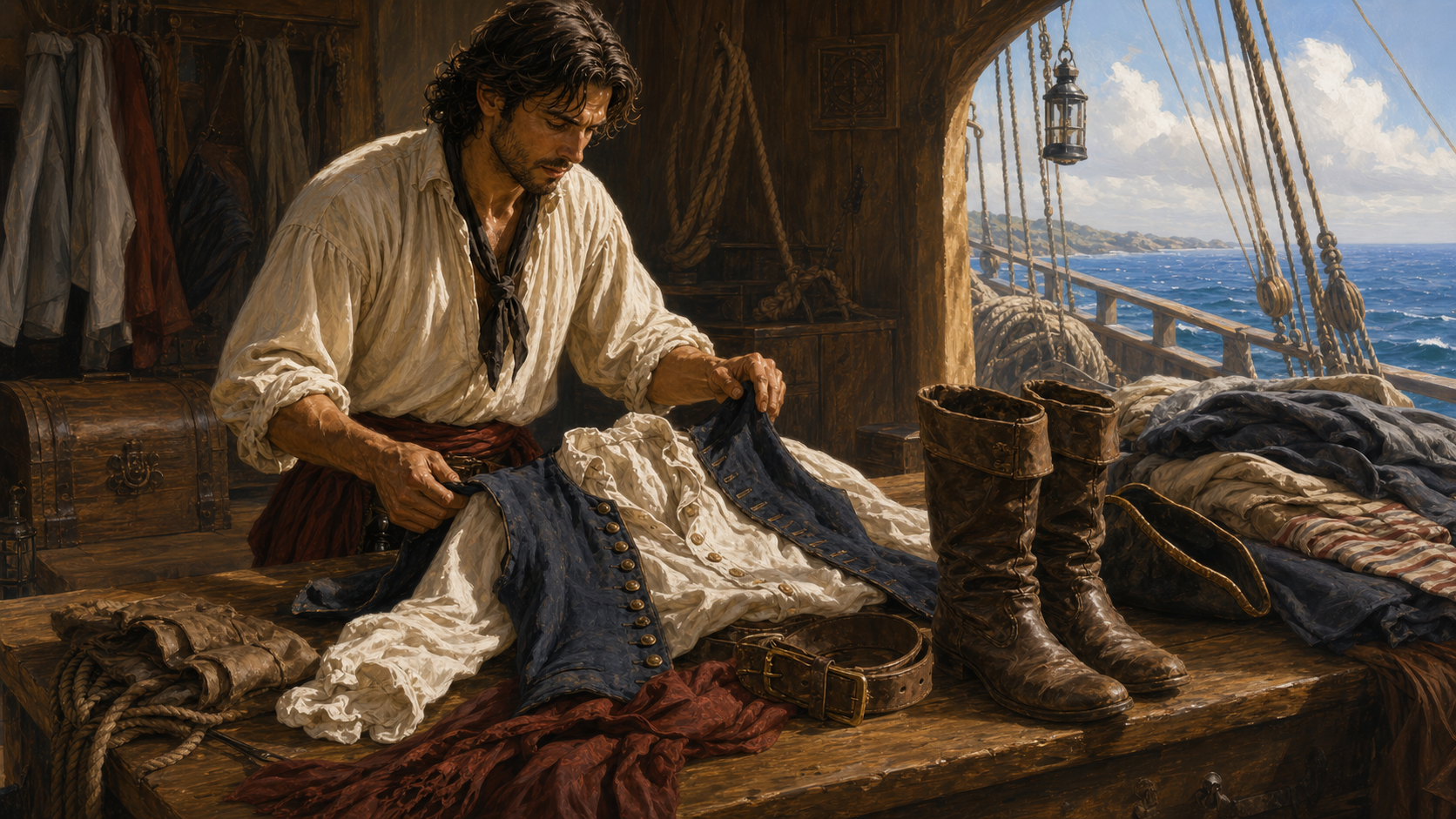
That is closer to history than it sounds. Clothing at sea had to survive salt, heat, rain, rope, sweat, repairs, and hard work. Pirates stole, traded, patched, reused, and displayed clothing, but the first requirement was still practical: the outfit had to stay on the body and let the body move.
<!-- Codex notes: - Import as draft only. Do not publish automatically. - Preserve attribution decision exactly as specified in frontmatter. - Review internal links against current Umbraco paths before publishing. - Source queue bucket: Blank-author, requires attribution decision - Audit note: Review for small clarity, evidence, and ending improvements without stretching the topic. -->

