History feature
Historical route
A wreck that gave pirate rumor something heavier than rumor to stand on.
Most pirate treasure stories depend on a rumor.
The Whydah Gally left a wreck. That changes everything. A wreck can be mapped, excavated, cataloged, disputed, and compared with the written record. It cannot answer every question, but it gives pirate history something better than a tavern story repeated until it starts wearing a uniform.
The Whydah pulls Samuel Bellamy’s world out of pure legend. The ship connects piracy to slavery, Atlantic trade, weather, archaeology, law, and the hard evidence of objects that survived when most of the crew did not.
A slave ship became a pirate flagship
The Whydah Gally was built for the Atlantic slave trade before Bellamy captured her in 1717. That fact belongs at the front. Pirate treasure did not come from a clean adventure world. It moved through the same ocean as forced labor, imperial commerce, disease, extraction, and violence.
Bellamy's crew turned the ship into a pirate flagship only briefly. The vessel carried wealth, weapons, men, and the reputation of a captain whose career had risen with alarming speed. Then, in April 1717, the Whydah wrecked in a storm off Cape Cod. Bellamy and most of those aboard died. The sea cut the story off before courts, pamphlets, or later romance could arrange it neatly.
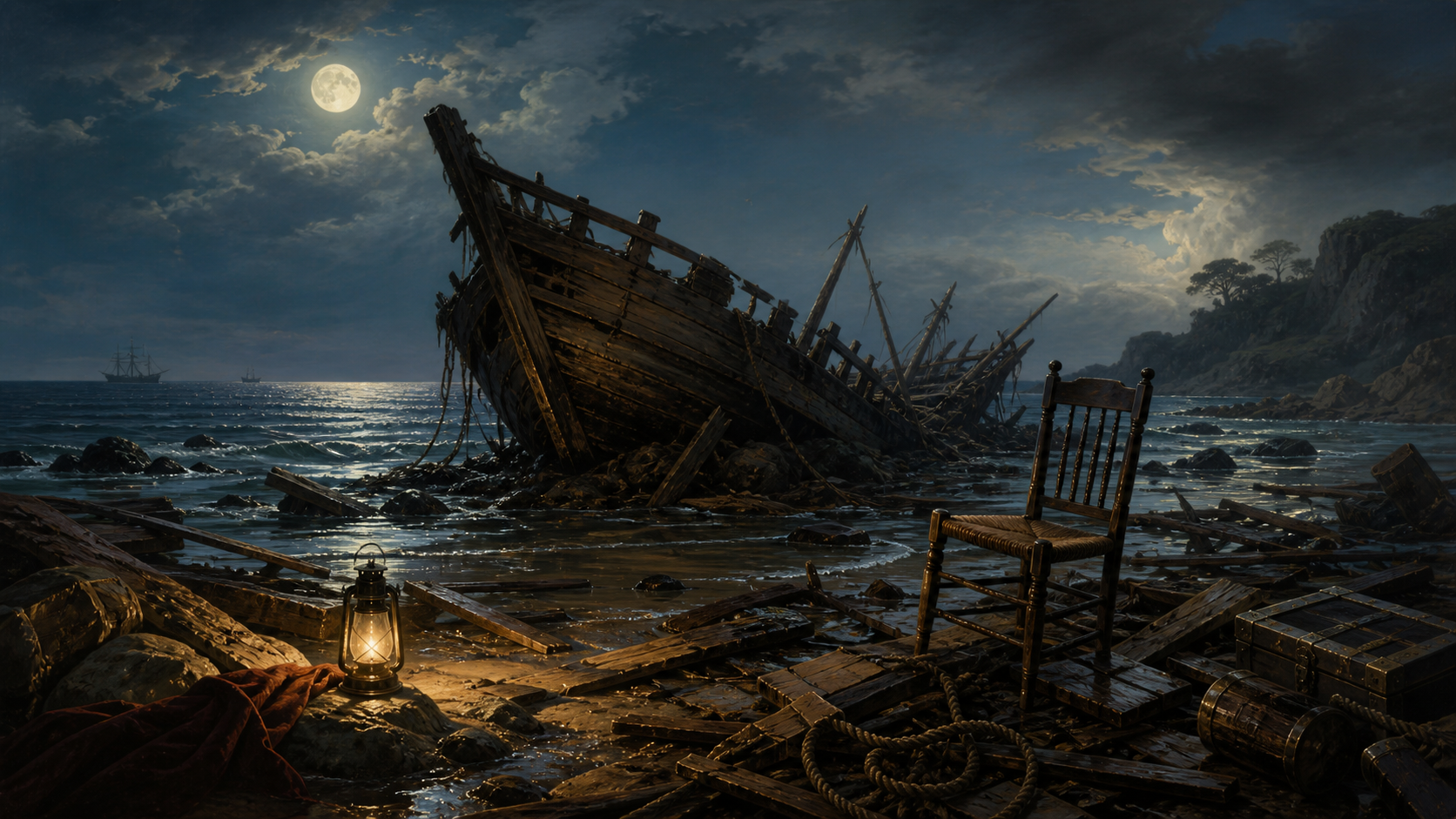
The wreck did not preserve a fairy tale. It preserved fragments: timber, cannon, coins, fittings, weapons, tools, and human traces from a ship that had already carried more than one kind of violence.
Archaeology gives the story weight
Many pirate lives survive through hostile witnesses, official reports, trial records, and printed histories written to warn, entertain, or justify punishment. Those sources are valuable, but they often catch pirates at moments of crisis: accusation, capture, trial, execution, panic.
The Whydah adds material evidence. Coins can show movement through trade. Weapons point to force and intimidation. Ship fittings reveal maintenance, design, and repair. Tools remind us that a vessel was a workplace. Small personal items return attention to the people crowded into the ship rather than the symbol later made from it.
Objects do not speak clearly on their own. They need context, and they can be misused by anyone eager for treasure romance. Still, they force the story onto firmer ground. A recovered object asks a better question than a legend: where did this come from, who used it, and what system placed it aboard this ship?
Treasure is the loudest evidence, not the deepest
Recovered treasure gets the attention. The quieter evidence often carries more historical force. A coin may show trade routes and value. A bell, fitting, or fastener can show the ship as a machine. A weapon shows how violence could be prepared before it was used. A shoe buckle, button, or tool makes the crew harder to flatten into a single pirate silhouette.
The ship's earlier life in the slave trade also keeps the story morally crowded. Bellamy's pirates captured wealth from an Atlantic economy already built on coercion. It does not make the pirates liberators. It places one form of maritime violence inside another.
A ship can change owners without becoming innocent.
A wreck can correct a legend
The Whydah does not prove every pirate treasure story. It does something better: it proves that one famous pirate story can be tested against the seabed. Bellamy's career, the storm, the cargo, the crew, and the ship's earlier purpose all become harder to dismiss and harder to romanticize.
The wreck also changes the ending. Pirate stories often prefer gallows, last words, or vanished fortunes. The Whydah ended in weather. No dramatic speech could bargain with the storm. The wreck left evidence instead of closure.
For Bellamy's life, continue to Samuel Bellamy. For the wider myth of pirate treasure, see Treasure Maps Lied. Pirate Money Did Not. The Whydah belongs between those routes: legend made tangible, treasure made uncomfortable, and gossip dragged onto the evidence table.


